Detectable risks
Common targets include metal, calcified bone, glass, stones, and dense plastics where contrast against the product is sufficient.
Application
GreyscaleAI helps food producers inspect for metal, bone, glass, stone, and dense plastic risks while preserving the x-ray image evidence teams need for QA review.
Application fit depends on the product, package, target material, size, density, orientation, and line conditions. GreyscaleAI uses application-specific validation to establish fit, then preserves reviewable inspection evidence in Insights.
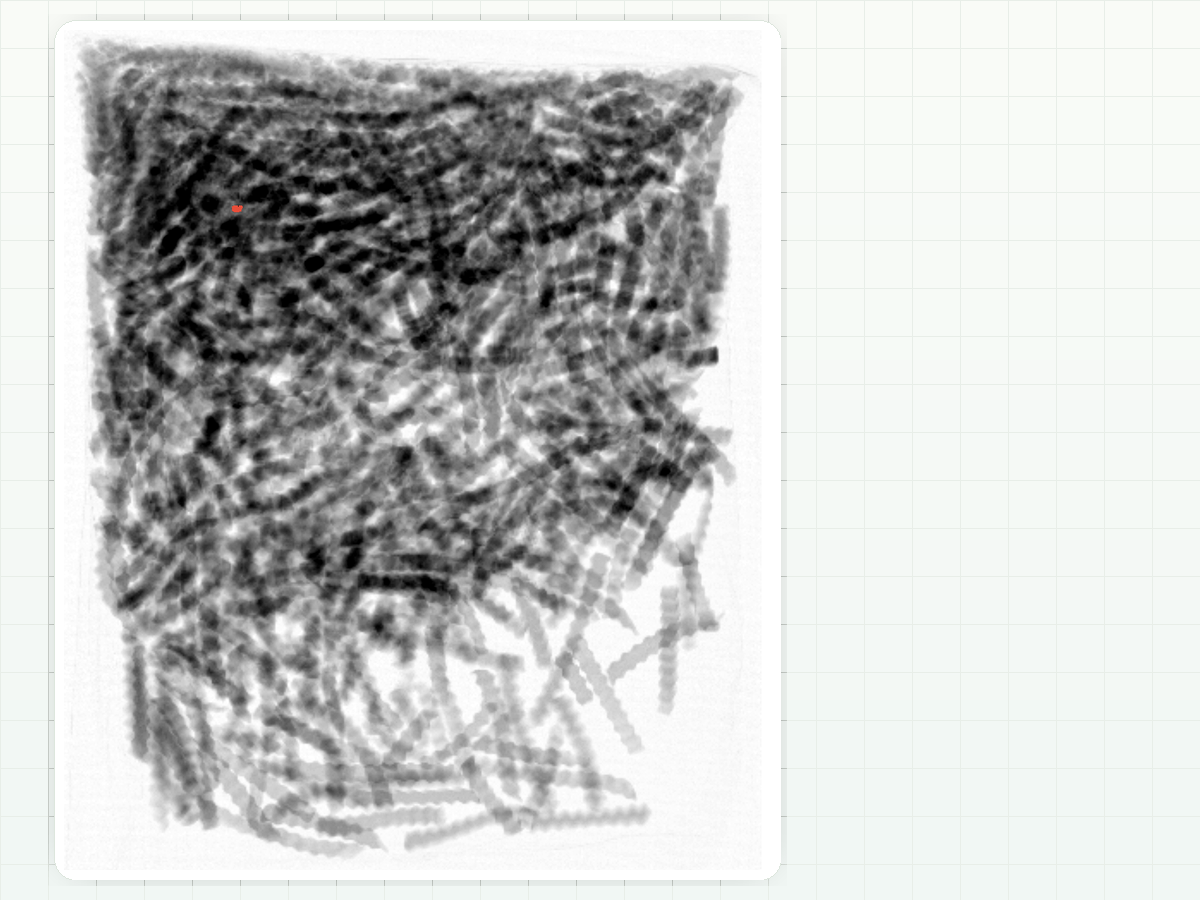
The production problem
Food safety teams need to confirm what the machine saw, how the event was classified, and whether the product and package create blind spots. GreyscaleAI combines inspection images, AI review, and event history so teams can move from a reject signal to a reviewable record.
Common targets include metal, calcified bone, glass, stones, and dense plastics where contrast against the product is sufficient.
Performance depends on product thickness, moisture, density, orientation, packaging format, contaminant size, and line speed.
Rejected units can be traced back to the underlying x-ray image and machine context for QA investigation.
Why traditional inspection struggles
A contaminant that is easy to detect in one product can be difficult in another. Product thickness, density, moisture, packaging, orientation, and line speed all affect whether the target creates enough contrast for reliable inspection.
Detection matrix
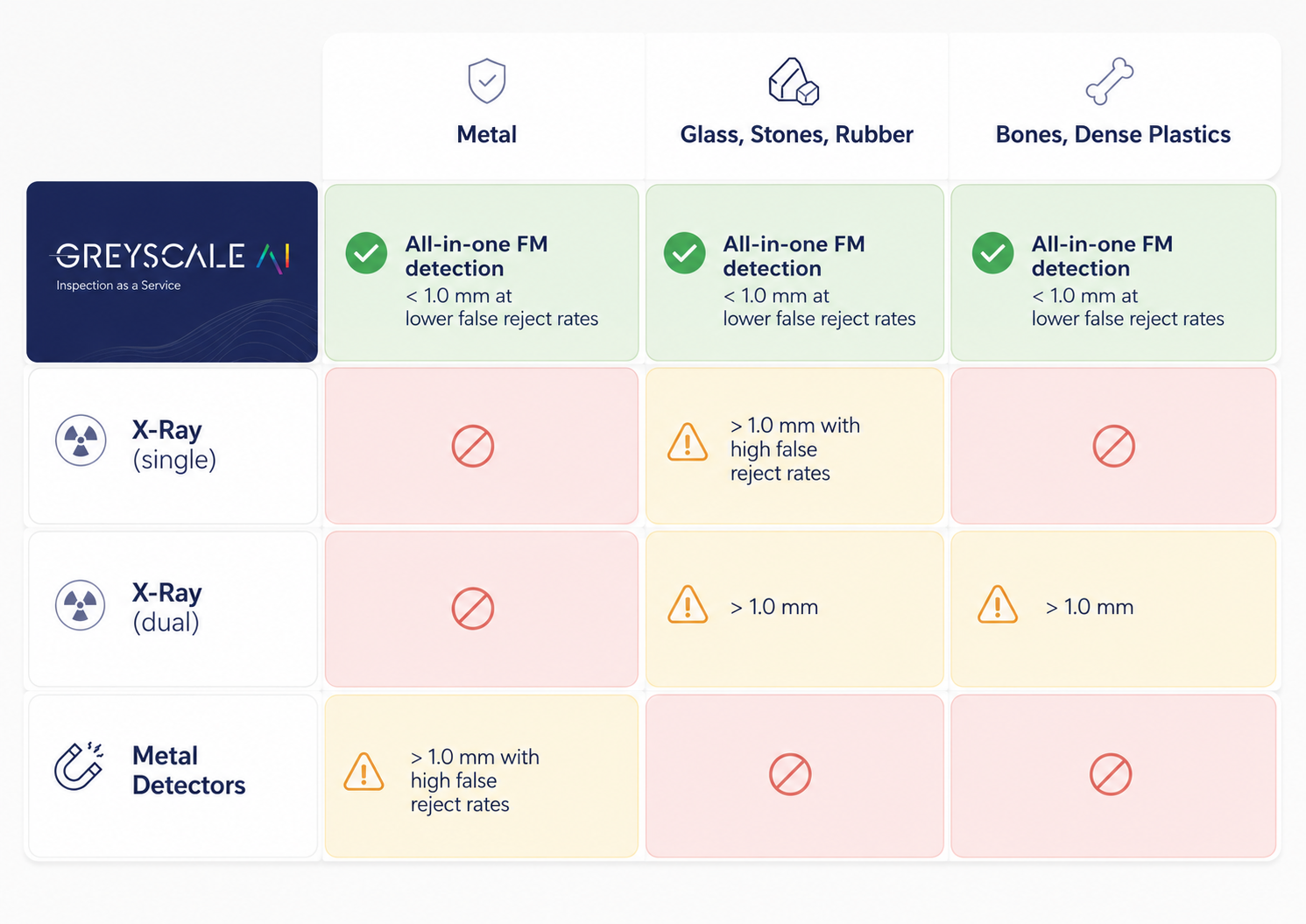
This matrix is directional, not a blanket guarantee. Validation should always be done with your actual product, package, contaminant set, and line conditions.
What GreyscaleAI sees
Often among the easiest contaminants to detect when product density is moderate.
Detection varies widely with product thickness, natural density, and bone composition.
Usually strong candidates where the product does not mask the contaminant.
Some dense plastics can be detected, but contrast is usually lower than metal or glass.
Image evidence
The value is not only the reject. Teams need the x-ray image, the highlighted region, the machine context, and a way to review related events before deciding what to do next.
A compact dense object can be reviewed directly in the x-ray evidence, even when the fragment is difficult to see at card size.
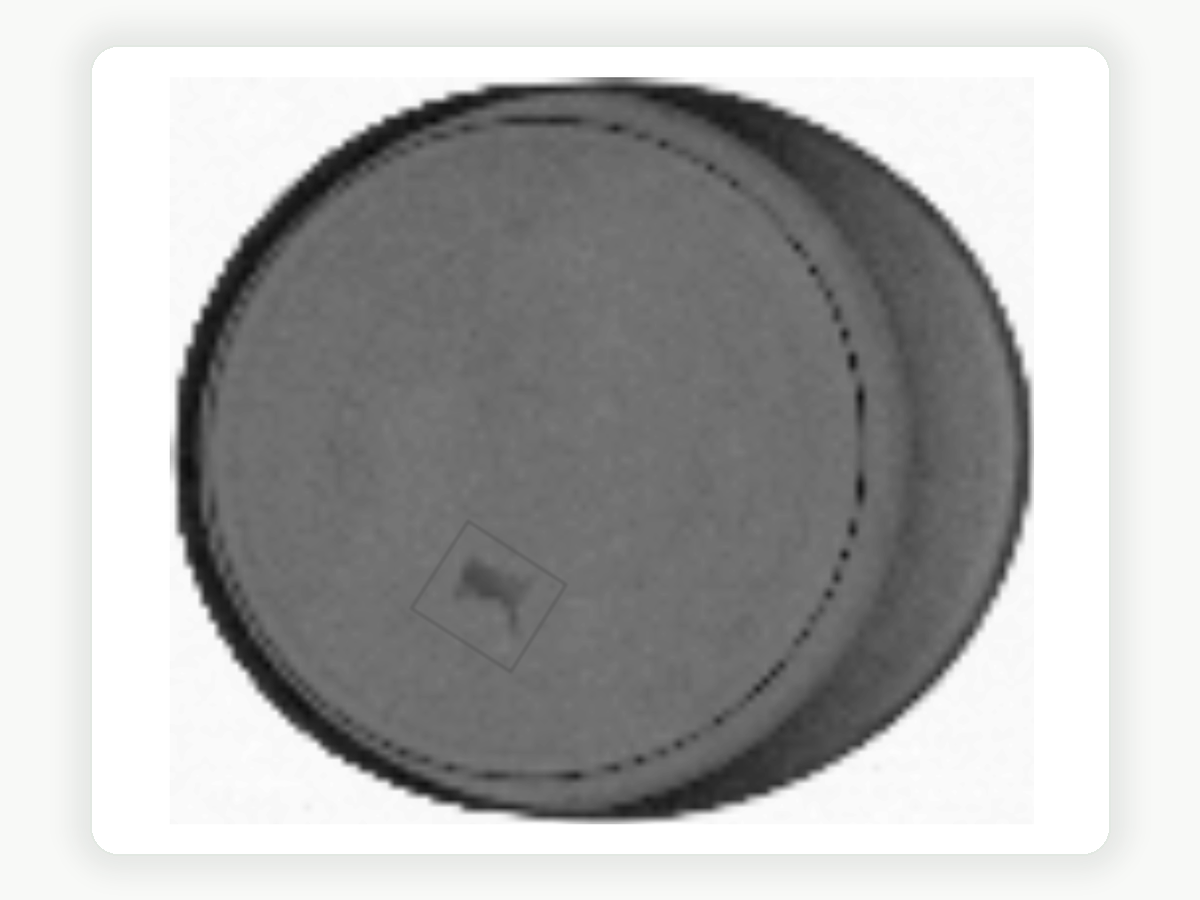
A small bone fragment can be reviewed directly in the x-ray evidence, even when it is difficult to see at card size.
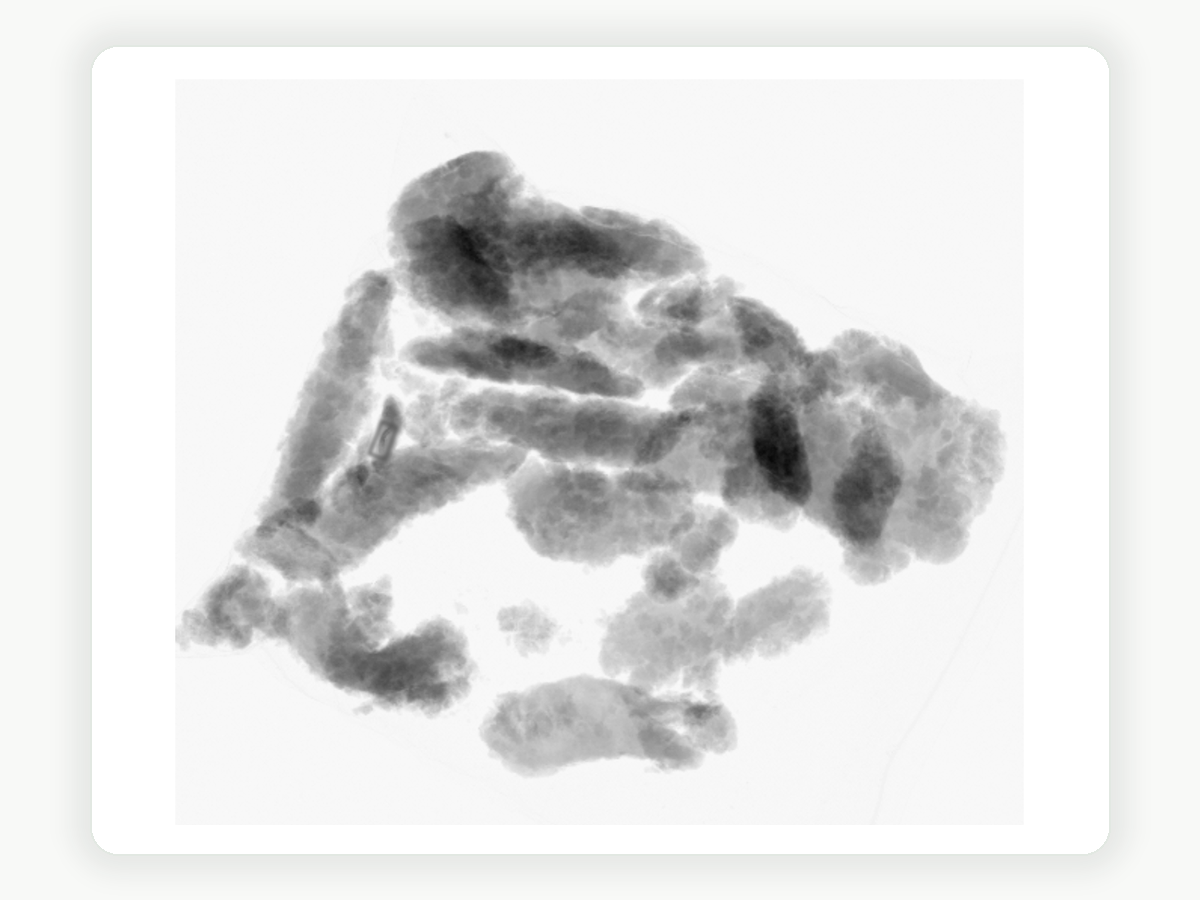
A small bone can be reviewed directly in the x-ray evidence, even when it is difficult to see at card size.
Insights workflow
GreyscaleAI helps teams move from a reject event to the supporting image, machine context, inspection history, and broader review path needed for action.
Search by product, lot, line, time window, event type, and related inspection records.
Open the x-ray image, highlighted region, AI decision, and machine context tied to the event.
Look for similar events by same product, same lot, same line, or nearby time window.
Use the record to support QA review, reinspection, hold/release decisions, or source investigation.
Related proof
An anonymized protein application showing how AI models helped distinguish true bone from normal poultry variation.
Protein products often combine foreign material risk, natural product variation, bone-related concerns, and QA review needs.
Related systems and fit
The right inspection system and validation plan depend on the actual product, package, target contaminants, line speed, and operating environment. Review HRX system options, discuss application-specific validation, or explore how inspection requirements change by product category.
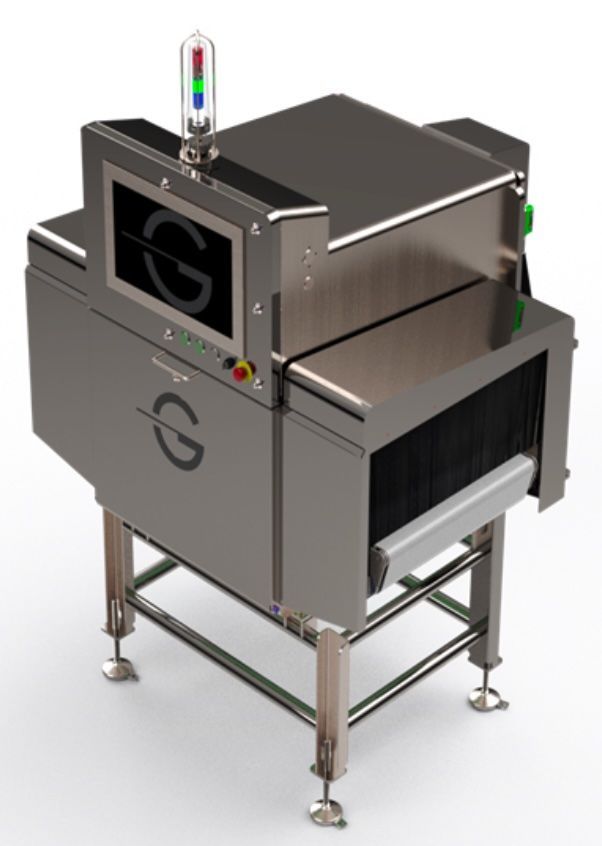
Review HRX system options for aperture, conveyor, throughput, and production environment.
Share your product, package, target contaminants, and line speed so GreyscaleAI can discuss validation under real operating conditions.
Seafood applications can involve foreign material, bone, package issues, image history, and production analytics.
Next step
Share the product, package, target contaminants, and line speed so GreyscaleAI can talk through validation under real operating conditions.
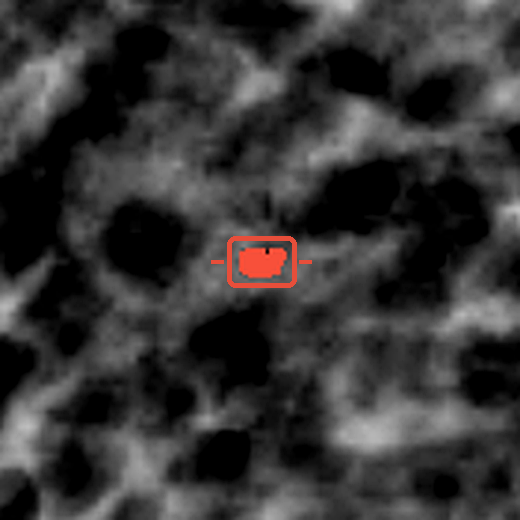 Metal fragment
 Bone fragment
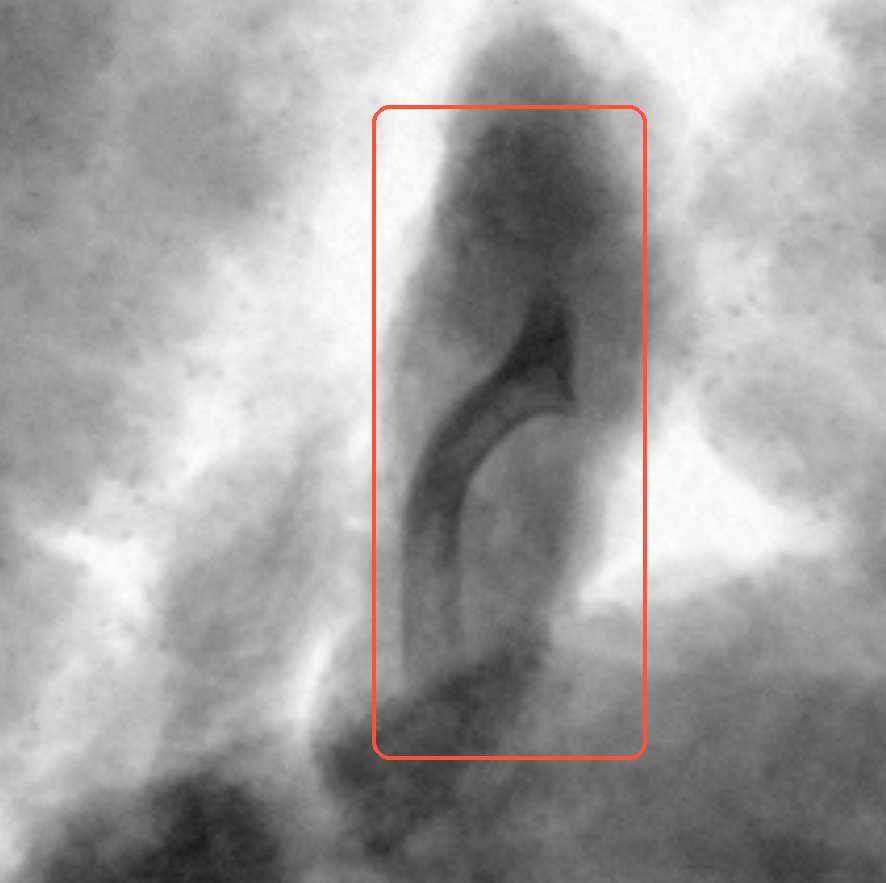 Bone in packaged chicken